Oil Tank Removal in Suffolk, Norfolk & Essex
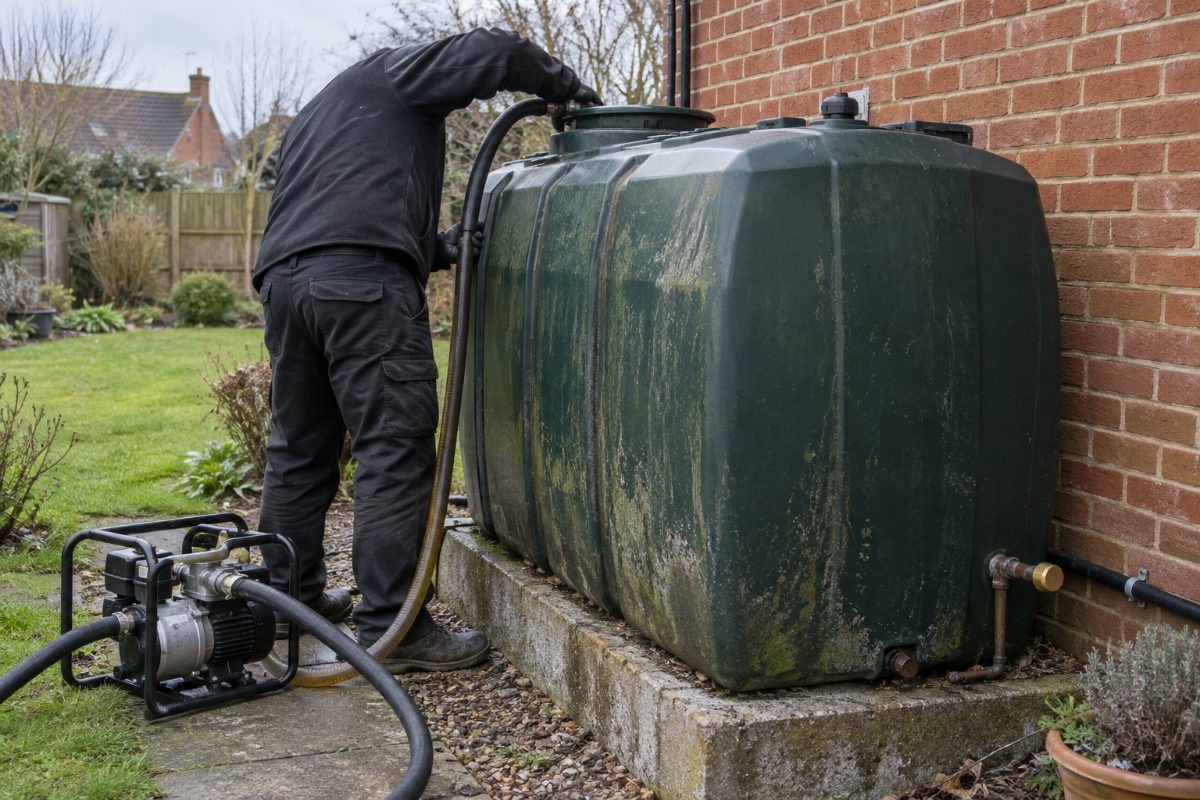
Old or redundant heating oil tank pumped out, disconnected, taken away and disposed of through a licensed route. OFTEC registered, waste transfer note, free written quote.
Oil Tank Removal
Taking a Tank Away Properly
Removing an oil tank sounds like a lifting job. It is mostly everything that has to happen before the lift: the oil still in it, the line running to the boiler, the fill point, vent and gauge, the sludge in the bottom, and what happens to the tank once it leaves your property.
Get those wrong and the problems arrive later. Oil left in a supply line, a tank that leaks residue on the way out of the garden, or a tank that ends up somewhere it should not, with your address attached to it.
MPD Tanks removes domestic heating oil tanks across Suffolk, Norfolk and Essex. One OFTEC registered contractor handles the pump-out, disconnection, removal and licensed disposal, and you get a waste transfer note as the record that it was done correctly.
Plastic or steel, single-skin or bunded, 1,000 litres or 2,500, in the side passage or at the bottom of the garden behind a car port. Tell us what you have and we will give you a fixed written price.
Why Remove It
Why People Have Their Oil Tank Removed
- Switching from oil to a heat pump, mains gas or electric heating
- Replacing an old tank with a new bunded one
- The tank has been condemned by an engineer or flagged on a survey
- Selling the house, and the buyer's surveyor has noted a redundant tank
- An insurer has asked for an unused tank to be dealt with
- Building an extension, garage or outbuilding where the tank sits
- The tank has leaked, or is showing signs it is about to
- A second, older tank that was left behind when a new one went in
Switching to a heat pump? There is a dedicated page on oil tank removal for heat pump switches, including timing the work around your installer and what to do with the oil you have already paid for.
Replacing the tank rather than going without? Removal of the old tank is part of every oil tank replacement we do, so you only need one quote.
Our Process
How an Oil Tank Removal Works
Survey & Written Quote
We look at the tank, how much oil is left, the route out of your property and the base, then give you a fixed written price. Free, no obligation.
Pump Out the Oil
Remaining oil is pumped out and dealt with the way you have chosen: transferred to another tank, collected, or disposed of. The tank does not move until it is empty.
Disconnect & Make Safe
The oil line is disconnected, capped and sealed. Fill point, vent and gauge come off, and we make sure no oil is left standing in the pipework.
Remove & Dispose
The tank is drained of residue, cut down on site if the access needs it, lifted out and taken for licensed disposal. You get a waste transfer note and a clean site.
The Oil That Is Left
What Happens to the Oil Still in the Tank?
Most tanks we remove are not empty. A few hundred litres of kerosene left in the bottom is normal, and it is oil you have already paid for. You have three sensible options:
- Transfer it into a new tank, if you are replacing rather than removing
- Have it collected by an oil merchant, or passed to a neighbour or relative who is still on oil
- Have us dispose of it along with the tank
Decide before the day, and tell us roughly how much is left when you ask for a quote. It changes how we plan the pump-out.
⚠ Never let a tank leave with oil in it
A tank tipped on its side with oil or sludge still inside it will leak, onto your lawn, your drive and the road. If anyone offers to take a tank away without pumping it out first, that is the reason to say no.
Access, Cutting and the Base
The Three Things That Shape the Job
Access
How the tank gets from where it sits to the road. Side passage width, garden steps, gates, a car port in the way. Tell us the route and we plan around it.
Cutting on site
Where a tank cannot come out in one piece, it is emptied, cleaned of residue and cut down where it stands. Common with steel tanks and tanks boxed in by later building work.
The base
We remove the tank. Breaking out a concrete or paving base can be arranged as a separate job, or you keep it: a level base makes a good shed, log store or bin standing.
Remove or Leave It?
Why a Redundant Tank Should Not Just Sit There
There is no law that says a redundant domestic oil tank must be physically taken away. There is every reason not to leave one sitting in the garden untouched.
- It comes up when you sell. A redundant tank is exactly what a buyer's surveyor notes and a buyer's solicitor asks about. A waste transfer note answers the question in one email.
- Insurance. Home policies generally cover a sudden escape of oil. Slow seepage from a tank nobody has looked after is commonly excluded. Check your own wording.
- An empty tank is not a safe tank. Vapour builds up in the space the oil used to fill, and the vent is still open.
- The residue is enough to pollute. The sludge left in the bottom of an "empty" tank can still reach the ground or a watercourse.
Where removal really is impractical, formal decommissioning in place is the alternative. It is covered on the heat pump tank removal page.
Cost
What Moves the Price of Oil Tank Removal
Every removal is quoted individually, because the same 1,200 litre tank can be a two-hour job in one garden and a full day in the next. The things that move the price:
- Tank size and material. A large steel tank is a heavier, slower job than a small plastic one.
- How much oil is left, and whether it is being transferred, collected or disposed of.
- Access. A tank beside the drive is quicker than one at the bottom of a garden with steps and a narrow gate.
- Whether it needs cutting to get it out.
- The base, if you want it broken out and taken away too.
- More than one tank. Two tanks removed in one visit cost less than two separate visits.
When you compare quotes, ask what is not included. Pump-out, disposal of the oil and a waste transfer note should all be in the price, not added on the day.
Faster Quotes
What to Tell Us for a Quick, Accurate Quote
Most removals can be priced from a description and a photo. Include these in your enquiry and we can usually come back with a figure without a wasted trip:
- Tank size in litres (often on a label or moulded into the tank) and whether it is plastic or steel
- Single-skin or bunded, if you know
- Roughly how much oil is left, and what you would like done with it
- Where it sits and the route out: side passage, rear garden, behind a car port, any gates or steps
- Whether you want the base removed
- Your postcode, and a photo of the tank and the access if you can
Paperwork
Licensed Disposal and a Waste Transfer Note
A used oil tank and the residue in it are not general waste. They have to go through a licensed route, and householders have a legal duty of care to make sure their waste is handed to an authorised carrier. Using a registered contractor who gives you paperwork is how you meet it.
Every tank we remove is disposed of in line with the Environmental Protection Act, and you get a waste transfer note recording where it went. Keep it with your house documents. It is the piece of paper a buyer's solicitor will want to see.
If the tank has leaked, or you can see oil in the ground or near a drain or watercourse, read what to do with a leaking oil tank first. A leak changes the order things need to happen in.
Coverage
Oil Tank Removal Across Suffolk, Norfolk and Essex
We are based in Mendlesham, near Stowmarket, and remove oil tanks across all three counties, including Ipswich, Stowmarket, Bury St Edmunds, Woodbridge, Felixstowe, Saxmundham, Framlingham, Diss, Norwich, Colchester, Chelmsford, Sudbury and the villages around them.
County pages: oil tank removal in Suffolk · oil tank removal in Norfolk · oil tank removal in Essex. Not sure if we reach you? See the full service area or just ask.
FAQs
Oil Tank Removal: Common Questions
How much does oil tank removal cost?
It depends on the size and material of the tank, how much oil is left in it, the access, whether it needs cutting on site and whether you want the base removed. We quote every job individually with a fixed written price. Send us the tank size, a rough idea of the oil left, your postcode and a photo, and we can usually price it without a visit.
Is oil tank removal ever free?
Not as a rule. Pumping out, disconnecting, transporting and licensed disposal all cost money, and a contractor who offers to do it for nothing has to recover that somewhere. The quote is free. The oil left in your tank also has value: transferring it to a new tank, or having a merchant collect it, can offset part of the cost.
Do I have to remove an oil tank I no longer use?
There is no legal requirement to physically remove a redundant domestic tank, but you are responsible for it not becoming a hazard. Leaving it full or half-full, or emptied but never made safe, is not an option. Either have it removed, or have it formally decommissioned in place.
Can I keep the oil if I am removing the tank?
Yes. We can pump it into a new tank if you are replacing, or into temporary storage so a merchant can collect it, or you can pass it to someone still on oil. Tell us when you book, because it changes how we plan the pump-out.
Do I need permission to remove an oil tank?
Removing an existing domestic oil tank does not normally need planning permission. The work should be done by a competent person, and the tank and residue must go through a licensed disposal route. You get a waste transfer note as the record.
What happens to the concrete base?
We remove the tank. Breaking out and taking away a concrete or paving base can be arranged as a separate job; tell us when you ask for a quote. Many people keep the base, because a level slab is useful for a shed, log store or bin standing.
Can you remove a tank that is hard to get to?
Usually, yes. Tanks behind car ports, at the bottom of gardens or boxed in by later building work are common. Where a tank cannot come out in one piece, it is emptied, cleaned of residue and cut down on site. Describe the route out, or send a photo, when you enquire.
Can you remove more than one tank in a visit?
Yes. Older properties often have a second, disconnected tank that was left behind when a new one went in. Removing both in one visit costs less than two separate visits.
Get a Free Oil Tank Removal Quote
Fixed written price, no obligation. OFTEC registered. Suffolk, Norfolk and Essex.
Related Services
Heat Pump Tank Removal
Switching to a heat pump? Removal or decommissioning timed around your installer
Oil Tank Replacement
Old tank out, new bunded tank in, one contractor
Oil Tank Relocation
Moving a tank to a new, compliant position
Leaking Oil Tank
What to do first if your tank is leaking
Oil Tank Cleaning
Sludge and water removal, decontamination, condition report